1 day
→
1 hour
Image optimizer service
1 day
→
1 hour
Customer support chat form
Workforce Directory reduced time to ship from days to hours.
Solution
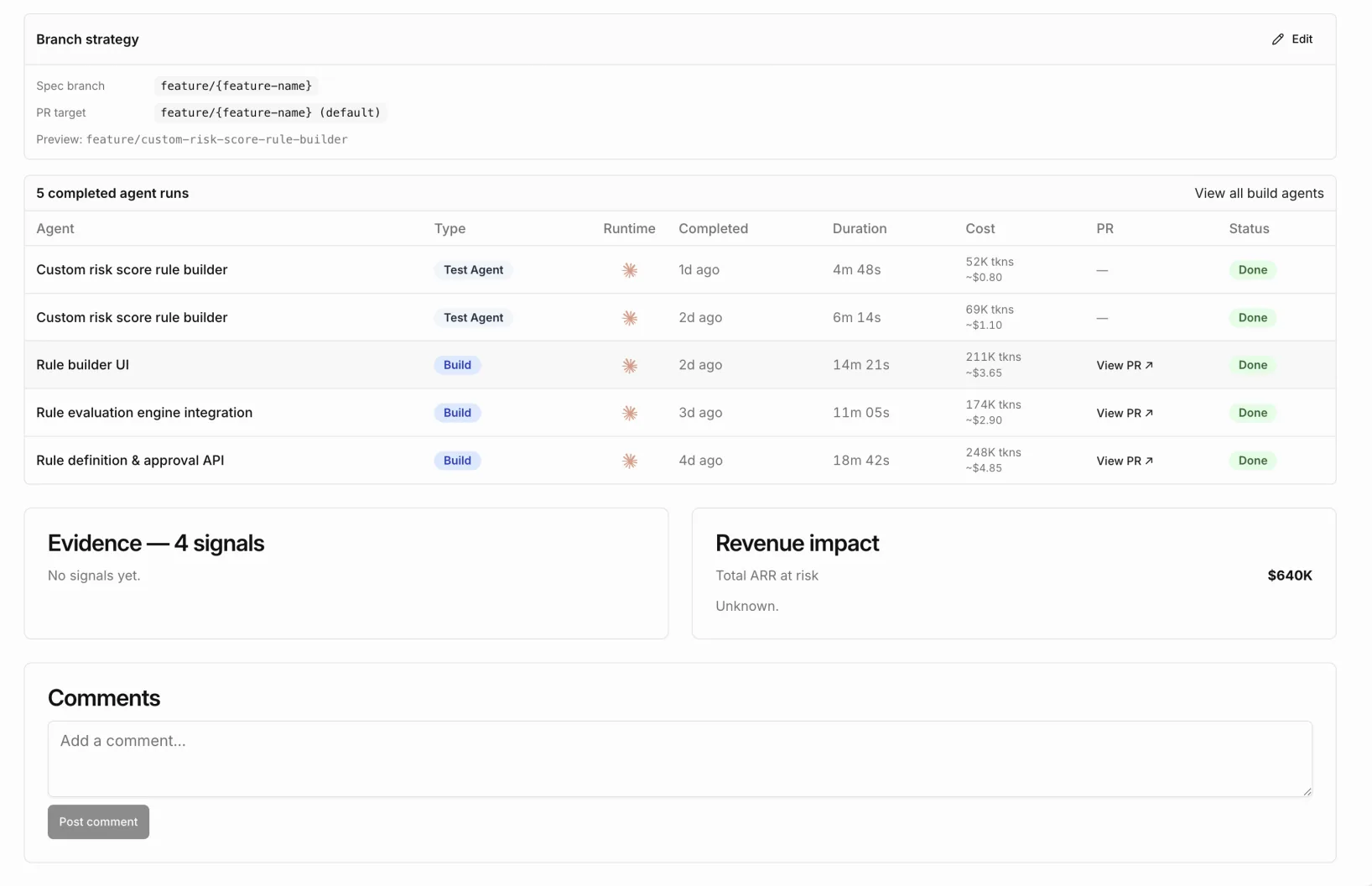
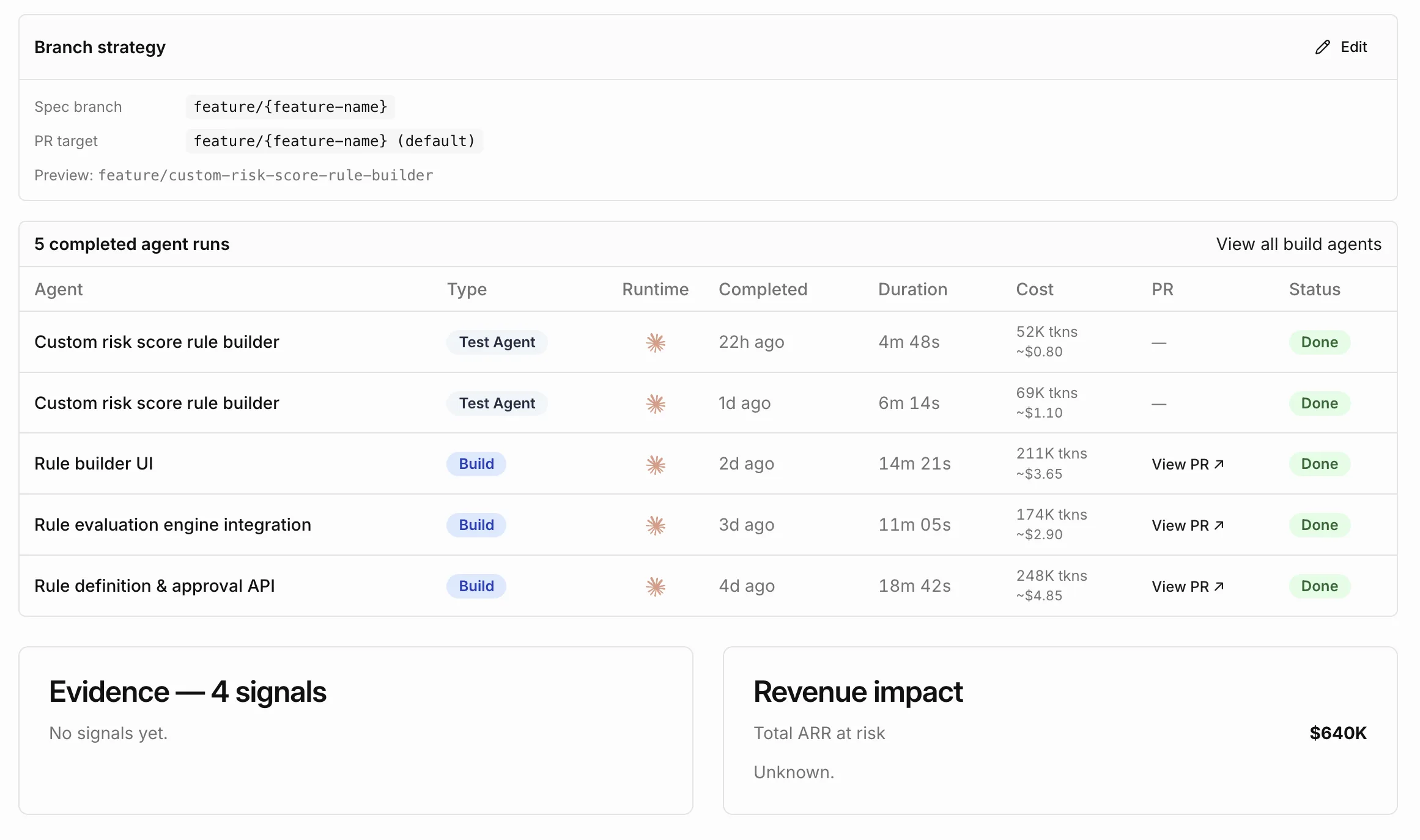
An engineering team for the requests you'll never get to. Agents work in a sandboxed clone, run your test suite, and open a pull request you review like any other.
The problem
You ship changes into a system you don't own, without the tribal knowledge the team that built it carries around.
PRDs, ADRs, specs — the same documentation the core team keeps, whether or not anyone wrote it with you in mind.
Without a documented reason behind every change, you're guessing your way through code you don't know, and so is whoever reviews it.
Workforce Directory reduced time to ship from days to hours.
The workflow
An approved PRD carries the request, the affected surface and the signals behind it.
Approved upstreamA fresh clone in an isolated container with scoped, short-lived credentials.
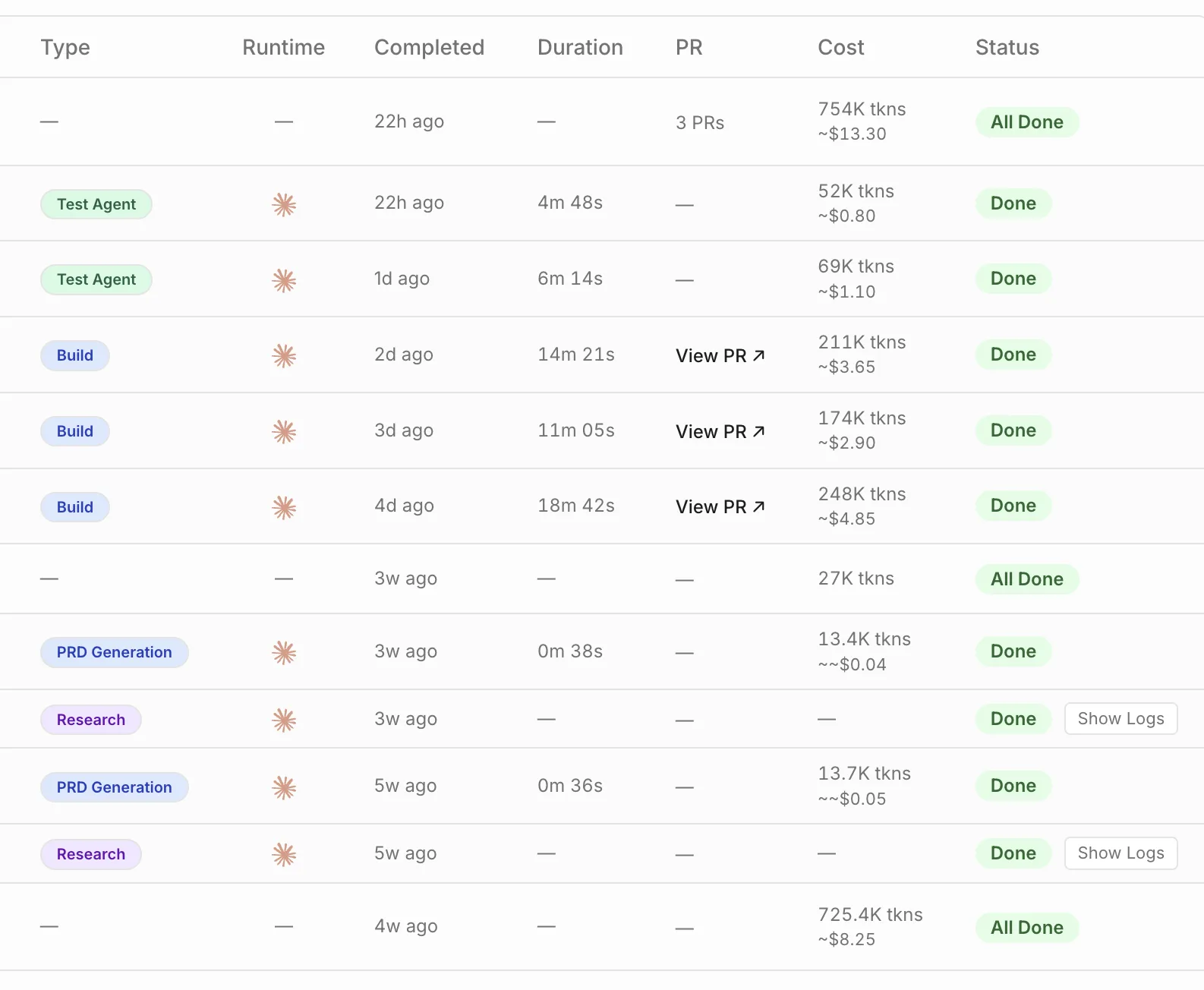
Isolated per jobChanges are made, your suite runs, failures are iterated on until green — cost tracked in real time as it goes.
Cost tracked liveA branch and pull request with the diff, test output and linked source signals.
Your reviewEngineering detail
A real GitHub pull request — review it, comment, request changes or merge it exactly like one opened by any engineer on the team.
Written for every change, scoped to what it touches, using the testing tools and frameworks already in the repo — and always overridable by you.
The tickets, calls or reviews the request came from, cited in the description.
Branch naming, commit format and PR template read from the repo it's changing, even one it's never touched before.
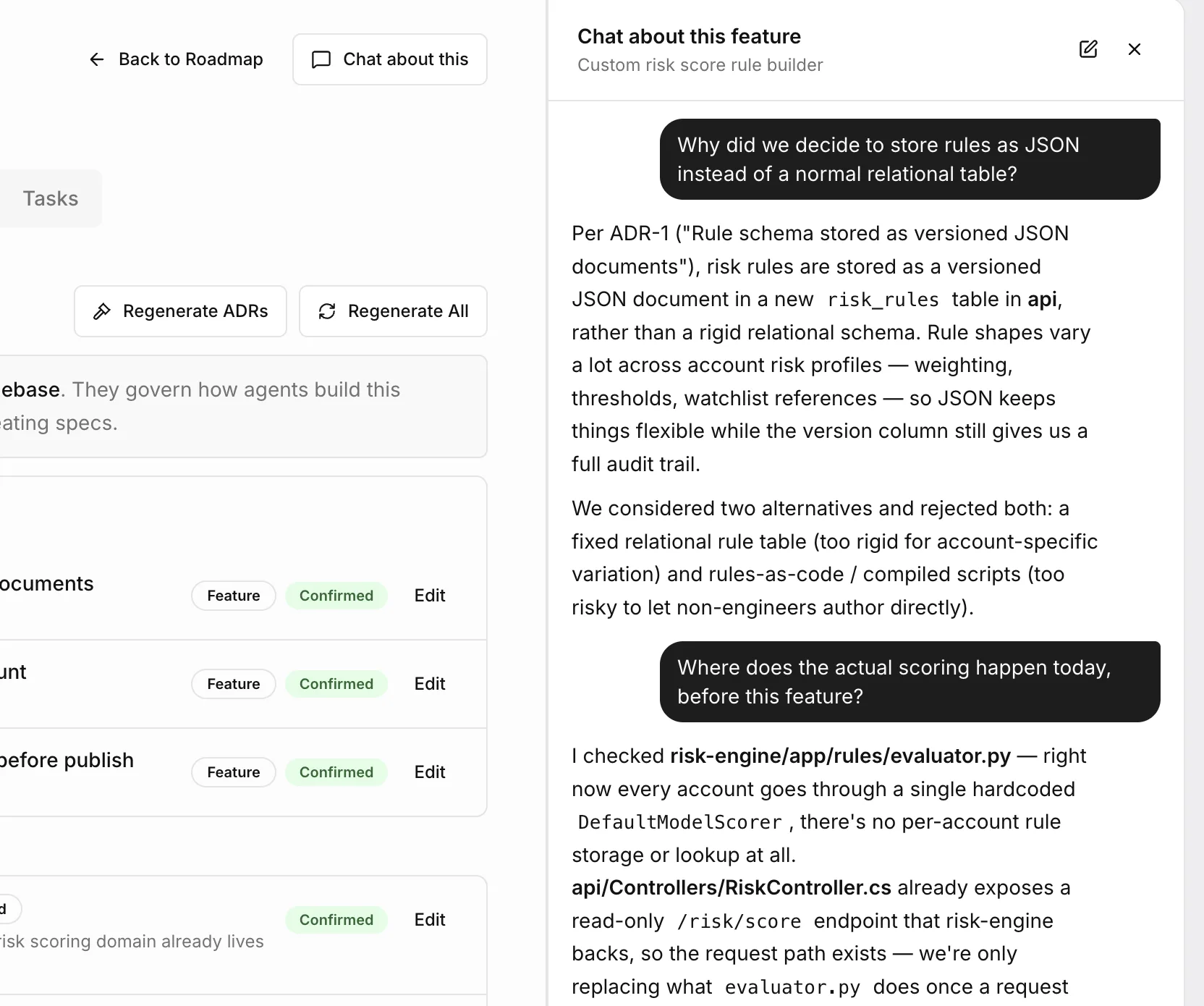
The ADR that decided where the change goes, the PRD describing what it is and why, and acceptance criteria written as if/when/then specs — the full record it was built and tested against.
Security
Scoped to the repos you select, with write limited to branches and PRs.
Cost is tracked in real time as the job runs, so you always know what it's spending — no black box.
Each job runs in its own container with no access to other tenants or jobs.
Code is read and diffed inside the job. Nothing from your repos is stored or retained afterward.
Run inference on your provider account if you'd rather not use ours.
Every job records inputs, spec, diff, test run and approver.
Three features carry the technical side of the pipeline.
The loop
VocxAI is the AI agent that keeps improving your product: it finds the patterns in customer feedback from any tool you use, works out what's wrong in your code, has AI agents build the fix for your approval, then checks whether it worked and acts on what it learns.
VocxAI finds the patterns in customer feedback, with the signals behind them.
AutomaticIt works out what's wrong in the codebase you're changing.
AutomaticAgents work in a sandboxed clone, run your test suite and open a pull request.
Held for your approvalYou review the pull request like any other before anything merges.
Your decisionVocxAI checks whether it worked and acts on what it learns.
OngoingOther teams
See how VocxAI fits your team.
Ready for early adopters - join now and we'll map it to your workflow.
Sign up for free